
Key hole surgery
Laparoscopy
Experience advanced, minimally invasive laparoscopic surgery for accurate diagnosis and effective treatment of gynecological conditions, with smaller incisions and faster recovery.
- 1.5 Lakh+ successful pregnancies globally
- Advanced technology: laser hatching
- 0% interest EMI options
About the procedure
What is Laparoscopy?
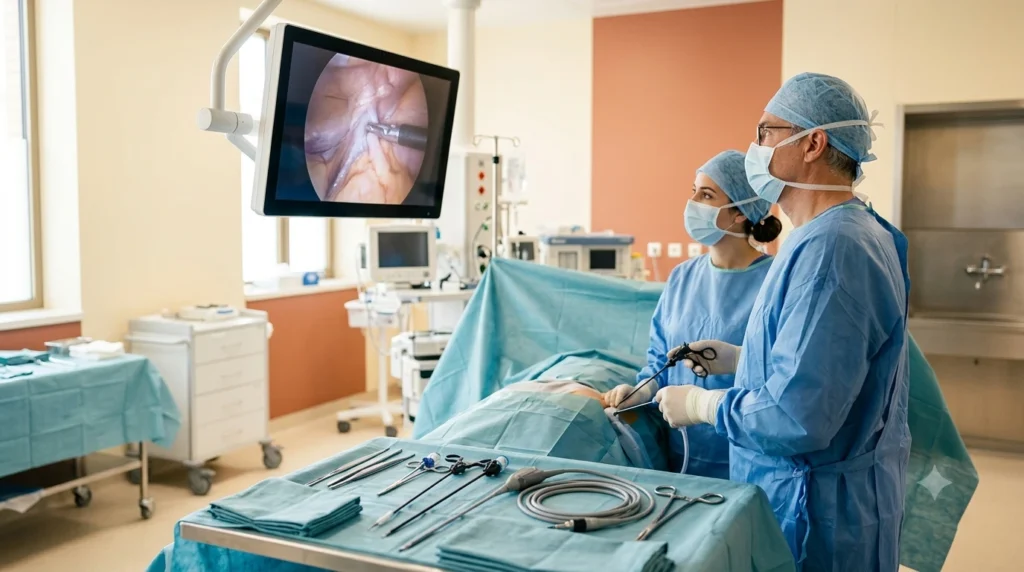
Laparoscopy is a way of performing key hole surgery. Instead of making a large incision (or cut) for certain operations, surgeons make tiny incisions and insert thin instruments with a camera attached to a telescope into an area, such as into the abdomen, to view internal organs and repair or remove tissue.
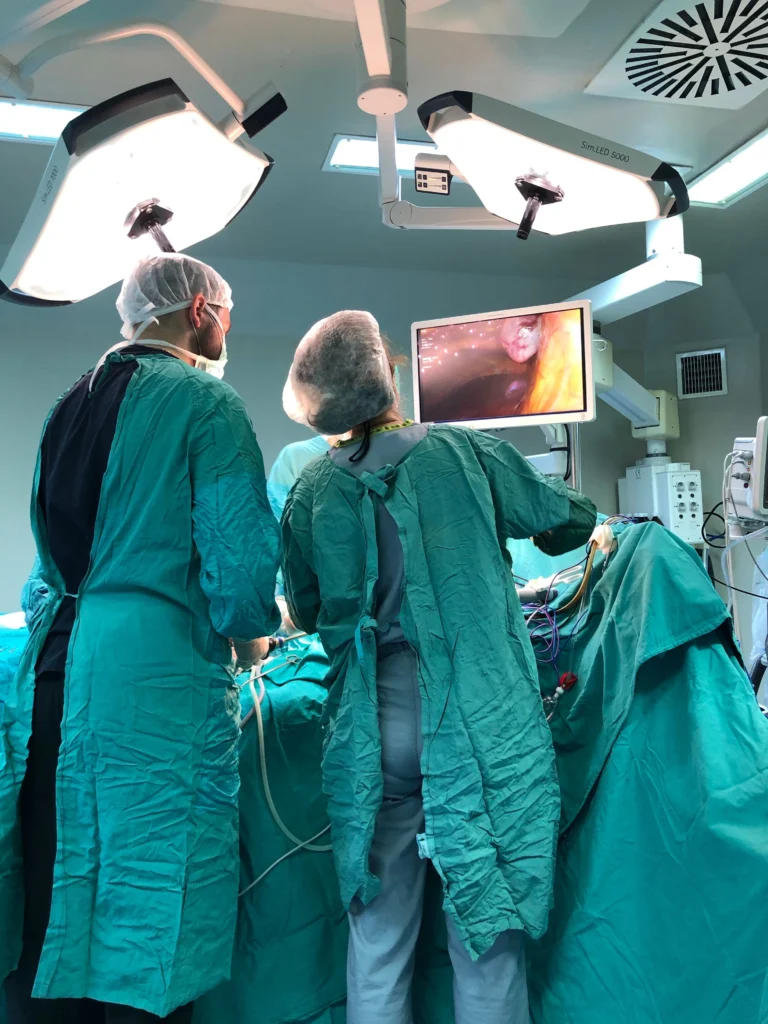
For patients, laparoscopy can often mean a faster recovery from conventional surgery, less time in hospital and less trauma to the body. Conceptually, the laparoscopic approach is intended to minimise post-operative pain and speed up recovery times, while maintaining an enhanced visual field for surgeons.
Is it for me?
Who needs Laparoscopy?
Patients with the following diagnosis will be advised laparoscopy:
Unexplained Infertility
Patients with longstanding infertility (more than 5 years), where semen count is normal, ovarian reserves are good and endometrium lining is good but the patient is still not conceiving.
Tubal block and hydrosalpinx
If your fallopian tubes are blocked due to presence of hydrosalpinx (infected fluid filled in the tubes) then it is better to remove this infection by laparoscopy and proceed. This generally happens with patients who have fimbrial block. Sometimes the tubes are diseased due to tuberculosis or PID. In such cases laparoscopy will help. In patients with simple tubal block the tube can be washed and opened via laparoscopy.
PCOD
Patients with PCOD can undergo ovarian drilling via laparoscopy. This is a surgical treatment for PCOD through which restoration of regular periods will happen.
Endometriosis
Endometriosis can be diagnosed and treated only with laparoscopy.
Pelvic Inflammatory Disease
Sometimes patients have a lot of adhesions (infected bands) outside the uterus, ovaries and fallopian tubes. These can be diagnosed and removed through laparoscopy.
Fibroids
Large and small fibroids in the uterus can be removed through laparoscopy within a day.
Thin Endometrium
Patients with persistent thin endometrium undergo laparoscopy to evaluate any underlying infection.
Recurrent IVF failures
Multiple IVF failures with good embryo quality should definitely undergo laparoscopy to understand the reason behind so many failures.
The procedure
How is Laparoscopy performed?
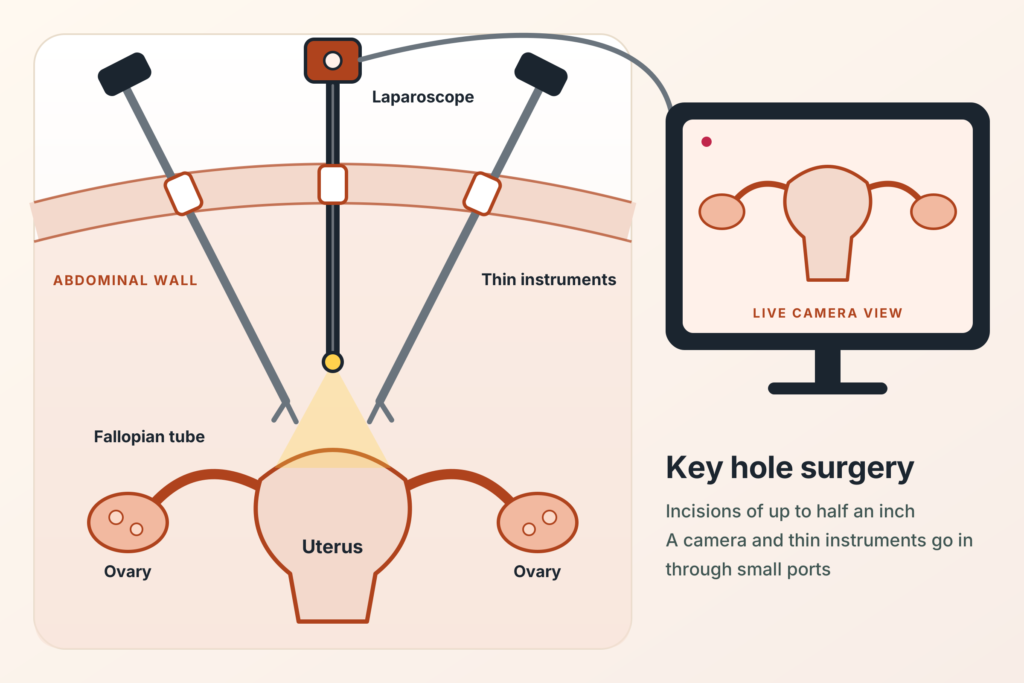
Laparoscopic surgery describes the performance of surgical procedures with the assistance of a video camera and several thin instruments. During the surgical procedure, small incisions of up to half an inch are made and plastic tubes called ports are placed through these incisions. The telescope with camera attached to it is introduced through the ports which allow access to the inside of the patient.
The camera transmits an image of the organs inside the abdomen onto a television monitor. The surgeon is now able to see directly into the patient without the traditional large incision. The video camera becomes the surgeon’s eyes in laparoscopic surgery, since the surgeon uses the image from the video camera positioned inside the patient’s body to perform the procedure.
As shown on the left, a small laparoscope has gone into the abdominal cavity and is viewing the uterus, the ovaries and the fallopian tubes.
Why key hole surgery
Advantages of Laparoscopy
Compared with conventional surgery, laparoscopy is gentler on the body.
Tiny incisions
Only about half an inch of incision is taken, which is less than any other surgery performed.
Faster recovery
Laparoscopy can often mean a faster recovery than conventional surgery.
Less time in hospital
It is generally a day care procedure. You come in the morning and are discharged by night or late evening.
Less trauma to the body
There is no large incision (or cut), so the body goes through less trauma.
Less post-operative pain
The laparoscopic approach is intended to minimise post-operative pain and speed up recovery times.
Clear view for the surgeon
The video camera gives an enhanced visual field, so the surgeon sees directly inside without a large incision.
What can be done
Surgeries done by Laparoscopy
Donor egg IVF may be discussed after a fertility specialist reviews the couple’s medical history, test results and previous treatment.
- Diagnosis for unexplained infertility
- Removal of hydrosalpinx (infected fluid in the tubes)
- Diagnosis and treatment of endometriosis
- Removal of large and small fibroids
- Tubal wash to open a simple tubal block
- Ovarian drilling for PCOD
- Removal of adhesions (infected bands)
- Evaluation of infection in thin endometrium and of recurrent IVF failures
Your questions answered
Common questions
Laparoscopy is a key hole surgery which means half an inch of incision will be taken which is less than any other surgery performed. Thus it is not very painful.
Laparoscopy is generally a day care procedure, which means that you will need to be in the hospital from morning and get discharged by night or late evening. But some hospitals prefer to keep their patients for a day under observation.
Laparoscopy can be avoided in some cases, not all of the above patients need laparoscopy. If you have been advised laparoscopy and want to take a second opinion call us on 80-80-943-943.
We're here to help
Join the thousands of families who started their journey right here
Our experts are ready to listen. If you have been advised laparoscopy and want to take a second opinion, call us.